Oic, weird, in Oz we just have a 0% tax rate for everything under 20k(ish)AUD, seems like a lot of extra steps to have tax rates listed for inconsequential amounts and then make people claim a deduction for those. Does the standard deduction apply to everyone or is it just if you earn less than the fixed amount? Because the latter would then penalise people for earning slightly more than the fixed amount which seems unfair …
The standard deduction is for everyone. There is a different figure for married/joint filers as well I think.
The only time it makes sense not to use it is if your job has lots of individual itemized deductions that add up to more than the standard deduction (most jobs don’t).
If you make less than the standard deduction (which isn’t a whole lot. I think like $16k for 2025), and know it, you can just choose to not have any taxes withheld from your check. Then when you file your taxes, you will owe nothing. I believe you’d also get a refund for the difference between the standard deduction, and your taxable income.
But yeah, everyone can claim it I think.
Edit: I’m second guessing the last part about people making less than the standard deduction getting a return for the difference… Wouldn’t that mean that someone could work for one day and then get a $16k check from the IRS? I’m sure I’m overlooking something…
The Married filing joint figure is…just 2x the single one.
But to your question, no. A deduction just reduces the value you are taxed on. That’s different from a fully refundable credit, which you get back the value of whether your earnings are above it or not. There are also nonrefundable credits which are not much different from a deduction, only bring you to 0, not negative tax owed.
We do, but it’s laughably low compared to the cost of living. It also only exempts you from personal income tax, not the other two major federal taxes that fund Medicare and Social Security. The majority of states also impose their own income tax, and the rules for how those are applied can vary wildly.
I don’t feel like I have a strong answer to that, other than there is a standard deduction applied to all federal tax returns. I suppose this would effectively give you the “tax free” bracket?
Yeah that seems likely given how the US does everything else, make that shit as complicated as possible so someone can fleece someone else and maybe leave some loopholes that someone in the know can exploit …
My wife is an accountant and according to her that’s precisely the reason. Tax software is a major racket, and they spend a lot to make sure the tax code remains unnecessarily complex.


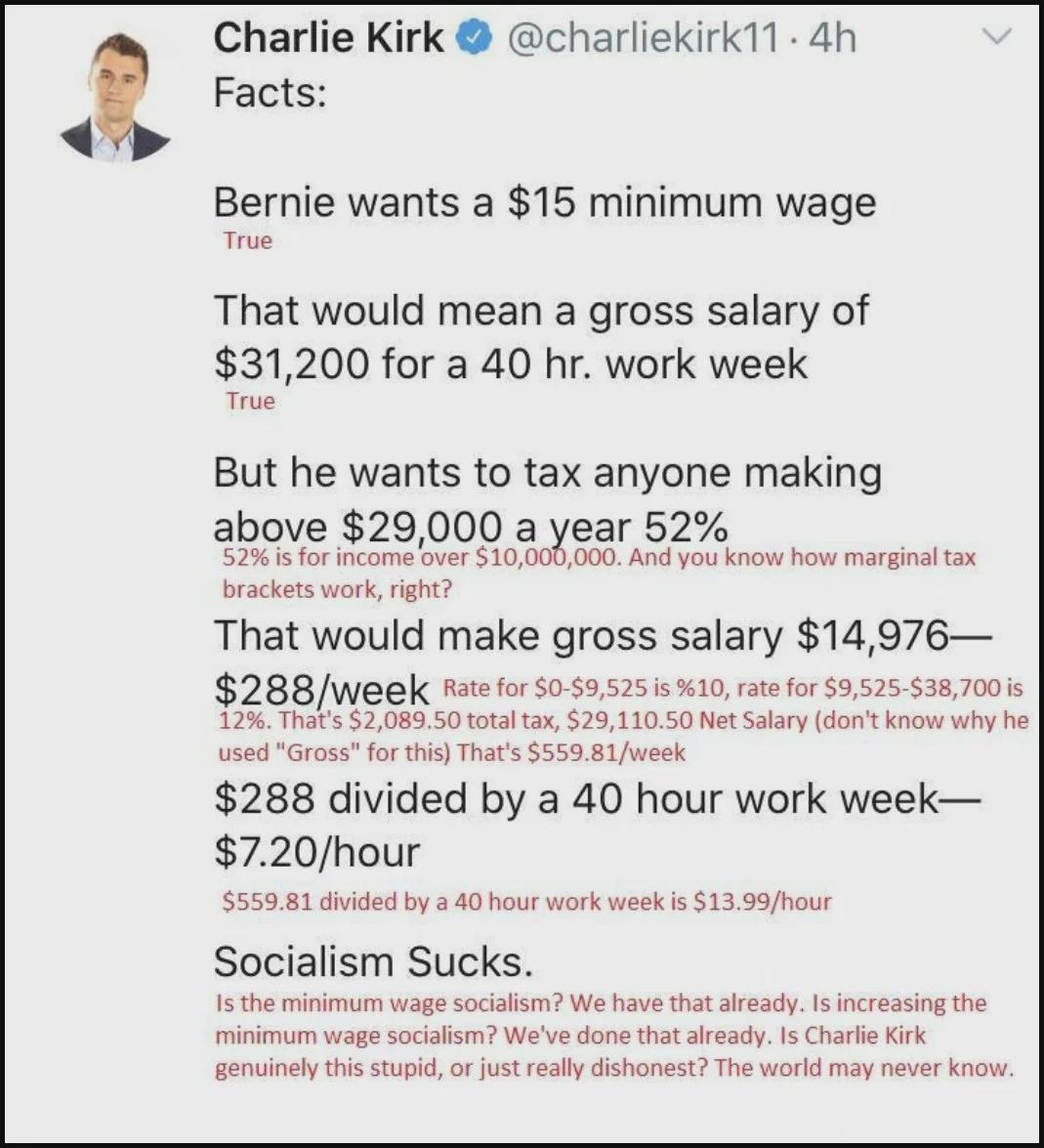
Wait, do Americans not have a tax free threshold?
Yep. It’s called the standard deduction. If you make less than that, you pay zero income tax.
Oic, weird, in Oz we just have a 0% tax rate for everything under 20k(ish)AUD, seems like a lot of extra steps to have tax rates listed for inconsequential amounts and then make people claim a deduction for those. Does the standard deduction apply to everyone or is it just if you earn less than the fixed amount? Because the latter would then penalise people for earning slightly more than the fixed amount which seems unfair …
The standard deduction is for everyone. There is a different figure for married/joint filers as well I think.
The only time it makes sense not to use it is if your job has lots of individual itemized deductions that add up to more than the standard deduction (most jobs don’t).
If you make less than the standard deduction (which isn’t a whole lot. I think like $16k for 2025), and know it, you can just choose to not have any taxes withheld from your check. Then when you file your taxes, you will owe nothing. I believe you’d also get a refund for the difference between the standard deduction, and your taxable income.
But yeah, everyone can claim it I think.
Edit: I’m second guessing the last part about people making less than the standard deduction getting a return for the difference… Wouldn’t that mean that someone could work for one day and then get a $16k check from the IRS? I’m sure I’m overlooking something…
The Married filing joint figure is…just 2x the single one.
But to your question, no. A deduction just reduces the value you are taxed on. That’s different from a fully refundable credit, which you get back the value of whether your earnings are above it or not. There are also nonrefundable credits which are not much different from a deduction, only bring you to 0, not negative tax owed.
They don’t pay the difference, but it is possible to get something back if you’re below the SD via credits like EIC or CTC.
Republicans do this thing where they lie about everything to make reasonable things sound bad to stupid people.
We do, but it’s laughably low compared to the cost of living. It also only exempts you from personal income tax, not the other two major federal taxes that fund Medicare and Social Security. The majority of states also impose their own income tax, and the rules for how those are applied can vary wildly.
I don’t feel like I have a strong answer to that, other than there is a standard deduction applied to all federal tax returns. I suppose this would effectively give you the “tax free” bracket?
Yeah that sort of makes sense, seems like a lot of extra steps for no reason …
I think the “no reason” might be TurboTax/Intuit/that one tax filing company named after a couple or whatever
H&R Block
Yup. That’s the one.
Yeah that seems likely given how the US does everything else, make that shit as complicated as possible so someone can fleece someone else and maybe leave some loopholes that someone in the know can exploit …
My wife is an accountant and according to her that’s precisely the reason. Tax software is a major racket, and they spend a lot to make sure the tax code remains unnecessarily complex.