Stop vertical video syndrome.
Do you hold your phone horizontally while browsing lemmy?
At the end of the line, driver jumps out and switches tracks. Next to the switch, he digs up a small, plastic bottle out of the snow, takes a big swig of homemade pálinka, puts it back under the snow, hops on, and heads back to clear the other track.
At least, that’s what I would have done.
You would fail the vigilance test. Trams and other modern trains has a light on their control panel which lights up at random intervals, and you have to push a button after that. If you can’t push it quickly enough the train stops. It checks if you fall asleep, or your attention decreases. So you shouldn’t drink any alcohol if you want to drive heavy machinery.
That must be the most satisfying job in town.
Not a frequent job, such amount of snow is rare here, these plowing trams were not used in the last 10 years. If the snow is less then 10 cm high regular trams can go through it.
These tram models are BSZKRT 70 and 71, Budapest Transport Corporation (BKV) has 7 of them. They were made in 1926, so 100 years old. Their colloquial name is “Muki”, you can see them frequently on the streets in various support roles, pulling malfunctioned trams, transporting equipment between garages, checking rails etc. This snowplow configuration is rare.
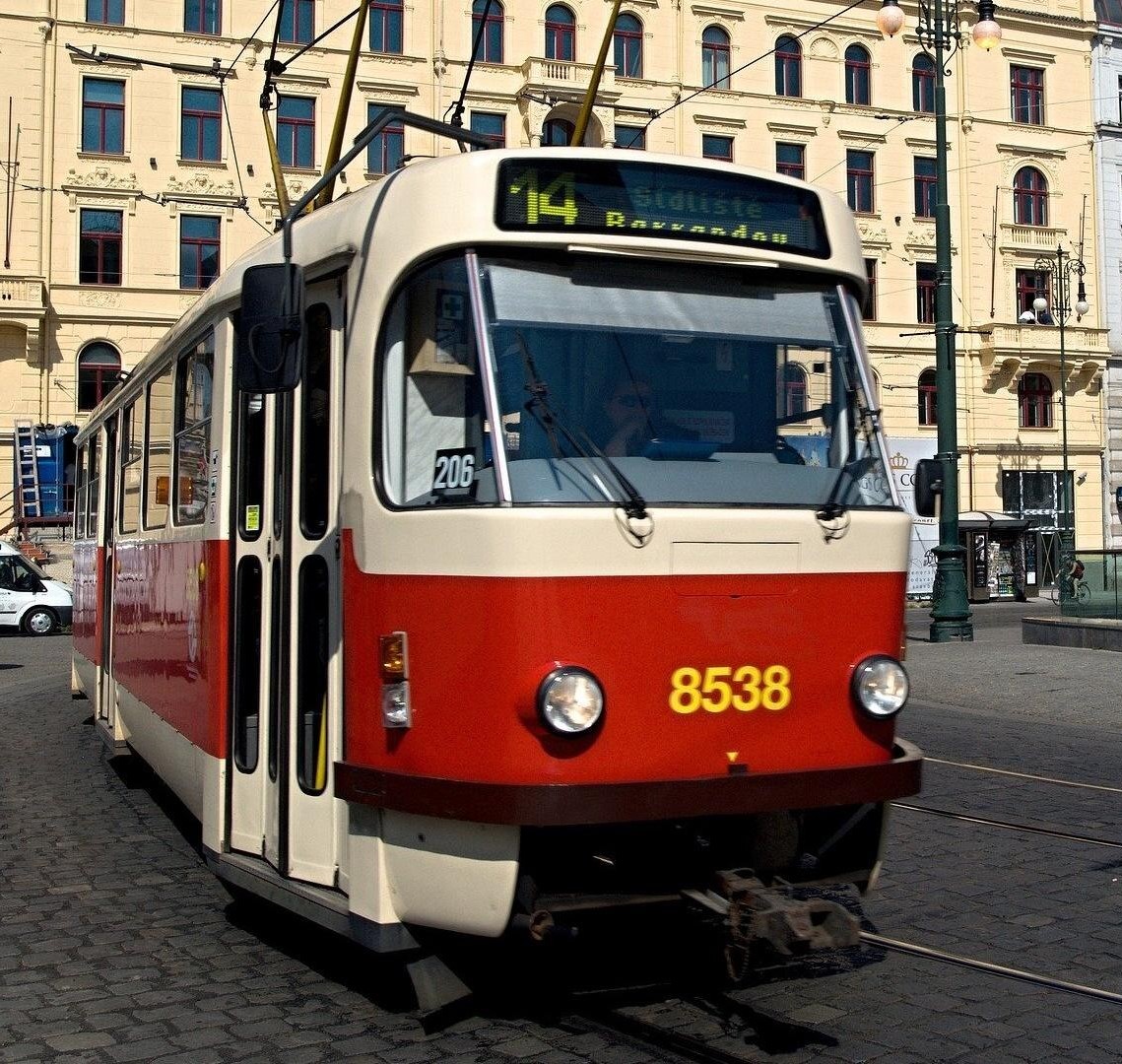
They look like this usually:

This summer they were pulling F1 cars as a RedBull ad:

In the 90s some factories still used the tram network for transporting supplies, “freight trams” were a thing, usually during the night:


100 years
It did look old tbh. Wow, you really held on to it. Here in Bucharest, we also have snow plowers, the ITB 3VU:
We also have the ITB 1VU, which is the model in the background of the same pic, but I haven’t seen it in action in the latter years. They must have phased it out maybe, since it was 20 years older than the former, made in the 1980s.
Also, another thing that I do not remember having was trams connected to train lines, as we never had cargo trams (afaik). There is still however a branch line to the former locomotive factory Faur, which somehow also got modernized with the rest of the section in 2007 or so, despite the factory almost closing (now I don’t think it produces anything anymore, only renting their spaces): google.com/maps/@44.4268207,26…
(somehow, the Google car managed to catch it right as a bus was blocking it, but you can tell by the catenary that it’s new).

Oh wow! That’s so cool.
The freight thing raises some questions though. Those things can get really heavy, and the rails should be rated for such weights. If not, the rails can sink into the ground.
They only used specific routes for freight, usually only to the closest train station. Only short freight trains ran there, not the 100 cars you can see on classic freight trains. And these routes were designed for that usage, as the factory was there first, and later the city grew it around.
The tram and rail network were heavily connected, in case of a war if the 2 rail bridges would have been blown up, freight trains could have used the tram tracks on the road bridges. Things were designed with a possibility of a nuclear war in mind, similarly how all underground stations could have been used as a nuclear shelter.
Here is an actual map from 1944 showing how freight trains could use the tram network:

Solid lines are train rails, different dashed lines are tram rails and spurs.
This actually didn’t help in WW2, because all bridges were blown up by the retreating nazis at the same time…
Amazing! Moments like this prove to me that Lemmy is ready to replace Reddit. We even have our own trolley historian too.
Really wasn’t expecting to go this deep into troellys when I wrote that first comment. Thanks for the thoughtful and educational replies! Much appreciated.
Man I picked the wrong profession… I wanna be in the cute lil trolley with the lil plow pushing silly fluffy snow. I didn’t even know this was an option.
I think there is one of the regular tram drivers that’s on duty each snowfall for this, or idk. I think this is only a full-time job in one of the nordic countries. There are regular train locomotives that do the same I think.
It’s so cute! I want one here! We’d for sure use it frequently, but more importantly it would mean we have trams!
Oh yeah that’s the good shit.
deleted by creator